


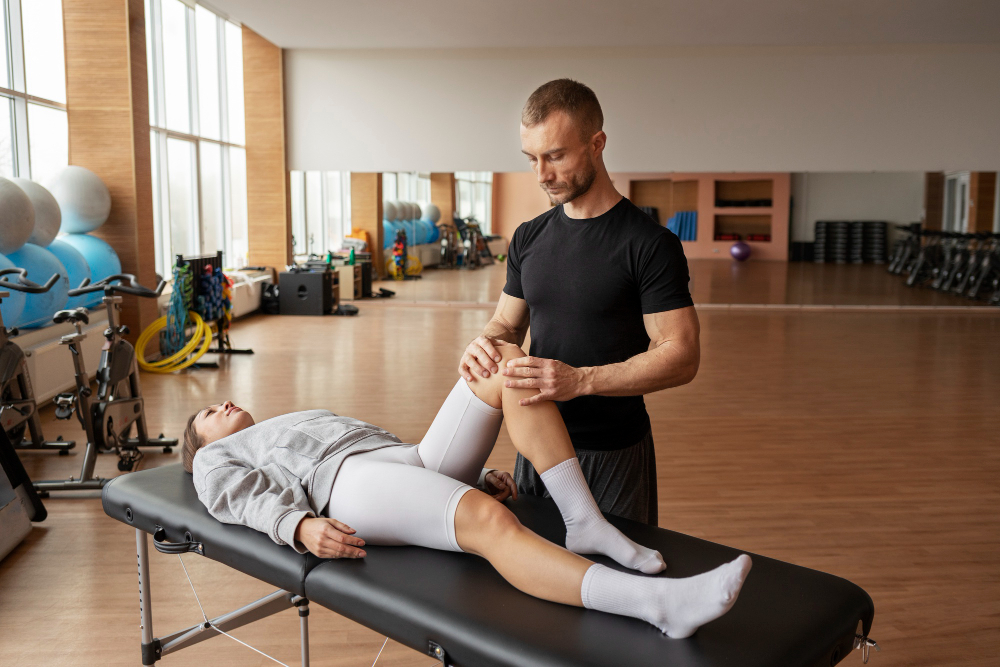
Sports Medicine has undergone a major transformation in recent years, shifting away from outdated recovery protocols toward dynamic, science-backed treatments. For nearly four decades, athletes and active individuals relied on the traditional R.I.C.E. framework—Rest, Ice, Compression, and Elevation—whenever a sprain, strain, or acute joint injury occurred.
However, modern exercise physiology and sports science have shown that excessive rest and prolonged icing can actually delay the body’s natural cellular healing processes. Enter modern recovery protocols like M.E.T.H. (Movement, Elevation, Traction, Heat) and active loading strategies, which prioritize blood circulation, controlled mobility, and functional tissue repair.
The Evolution of Acute Injury Care: R.I.C.E. vs. M.E.T.H.
When an acute injury occurs, your body triggers a natural inflammatory cascade. Specialized repair cells, oxygen-rich blood, and growth factors rush to the site of damage to begin structural repair. How we treat that initial window dictates how quickly and completely the tissue heals.
Traditional R.I.C.E. Protocol             Modern M.E.T.H. Protocol
+------------------------------+          +------------------------------+
| R - Rest (Immobilization)    |          | M - Movement (Early Motion)  |
| I - Ice (Vasoconstriction)   |   VS     | E - Elevation (Fluid Drain)  |
| C - Compression (Bandaging)  |          | T - Traction (Joint Space)   |
| E - Elevation (Limb Raise)   |          | H - Heat (Blood Circulation) |
+------------------------------+          +------------------------------+
Why the Traditional R.I.C.E. Method Is Changing
While R.I.C.E. was once the gold standard, modern clinical research highlights key limitations in its approach:
-
The Problem with Prolonged Rest: Completely immobilizing a sprained joint or muscle leads to stiffness, tissue atrophy, delayed muscle activation, and slower structural repair.
-
The Drawback of Excessive Ice: Applying ice constricts local blood vessels (vasoconstriction). While cold therapy numbs acute pain, it temporarily stops the delivery of repair cells and delays the removal of cellular waste.
-
Delayed Tissue Remodeling: Suppressing inflammation too aggressively can alter normal scar tissue alignment, leaving muscles and ligaments weaker and more susceptible to re-injury.
Decoding M.E.T.H.: The Science of Active Recovery
The M.E.T.H. method aligns directly with how biological tissue naturally repairs itself:
1. M – Movement (Controlled Activity)
Instead of complete rest, gentle, pain-free range-of-motion movements encourage cellular alignment and prevent joint stiffness. Light movement signals the body to align newly formed collagen fibers along structural stress lines.
2. E – Elevation (Gravitational Drainage)
Propping the injured limb above the level of your heart relies on gravity to assist natural lymphatic drainage. This minimizes excessive fluid build-up (edema) without stopping tissue repair.
3. T – Traction (Decompressing Joint Structures)
Traction involves gentle manual elongation of joint structures. Light traction creates space between compressed surfaces, reducing nerve pressure, relieving acute muscle guarding, and improving local circulation.
4. H – Heat (Promoting Blood Flow)
While ice is still occasionally used for brief acute pain numbing, thermotherapy (heat) is increasingly used in sub-acute phases. Moist heat dilates blood vessels, bringing fresh oxygen, nutrients, and repair cells directly to damaged ligaments and muscles.
Key Biological Differences at a Glance
| Feature | R.I.C.E. Approach | M.E.T.H. & Modern Protocols |
| Primary Goal | Suppress inflammation & numb pain | Facilitate natural tissue regeneration |
| Blood Flow | Reduces flow via ice constriction | Enhances flow via controlled movement & heat |
| Joint Mobility | Immobilizes early on | Promotes early, pain-free range of motion |
| Recovery Speed | Can cause stiffness & delayed repair | Promotes faster return to sports activity |
When to Seek Expert Sports Injury Care
Self-care acronyms like R.I.C.E. and M.E.T.H. are useful first-aid references for mild sprains or strains. However, moderate-to-severe joint trauma, ligament tears, tendon injuries, or persistent severe pain require professional evaluation.
Consulting a dedicated Sports Injury Specialist in Ambala ensures your injury receives precise diagnostic imaging, clinical assessment, and targeted rehabilitation plans.
Specialists such as drpradyumnasharma combine advanced orthopaedic techniques, regenerative therapies, and progressive rehabilitation protocols to restore joint function, strength, and mobility, helping athletes return to peak performance safely.
Frequently Asked Questions (FAQs)
Ques-1 Should I ever use ice on a fresh sports injury?
Ans- Ice can still be used selectively for short periods (10–15 minutes) immediately following an acute injury solely to numb intense pain. However, prolonged or continuous icing over several days is no longer recommended because it slows blood circulation and cell-mediated tissue repair.
Ques-2 What is the risk of returning to sports too early after an acute sprain?
Ans- Returning to full athletic activity without completing proper active loading and proprioceptive rehabilitation significantly increases your risk of re-injury. Incomplete healing can lead to chronic joint instability, muscle weakness, and long-term joint wear.
Ques-3 How do I know if my injury needs clinical evaluation instead of home treatment?
Ans- You should see a specialist immediately if you experience an inability to bear weight on the joint, visible bone or joint deformity, rapid severe swelling, joint instability, or numbness and tingling in the injured extremity.
